How to Clean a Wood Deck (2026): Easy Step-by-Step DIY Guide + Best Cleaners
For many homeowners in the United States, a backyard deck is more than wood and fasteners—it’s where summer barbecues happen, where kids play, and where quiet morning coffee feels like a mini vacation. Because a deck lives outdoors 24/7 (from Arizona sun to Georgia humidity), it needs routine care to stay safe, attractive, and structurally sound.
Easy wood deck cleaning isn’t about making boards look “brand new” for a photo—it’s about preventing rot, splinters, slippery algae, and the mold/mildew growth that shortens the deck’s lifespan. This 2026 guide covers the safest tools, the best DIY and store-bought solutions, and a clear process you can follow without damaging your wood.
Quick answer: Sweep debris, wet the deck, apply an oxygen-based cleaner for 10–15 minutes, scrub with the grain, rinse thoroughly, then let the wood dry for 48 hours of clear weather before staining/sealing.
In this guide:
Safety note: Never mix cleaning chemicals. Wear gloves/eye protection, test any solution on a small hidden spot first, and rinse nearby plants with clean water before and after applying cleaners.
Essential Tools for Easy Wood Deck Cleaning
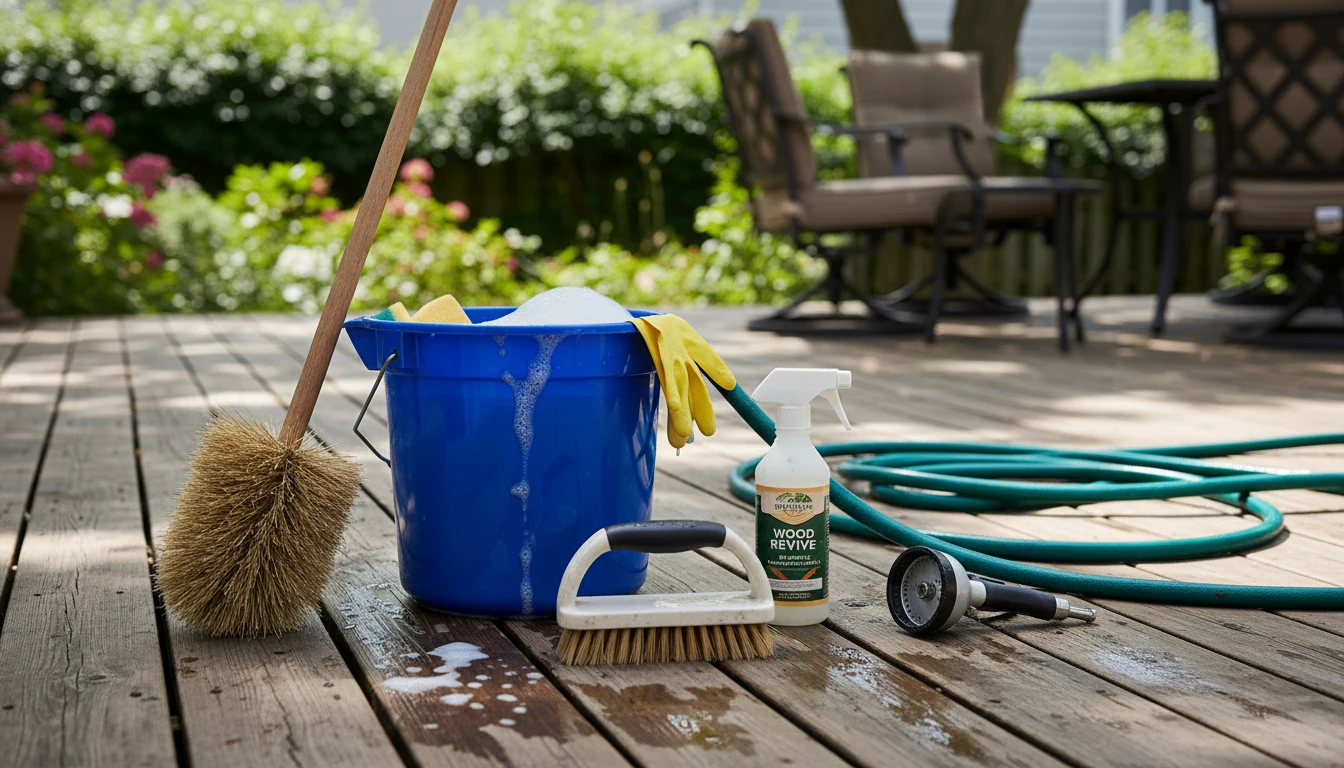
A common misconception is that you need expensive machinery to clean a deck. In many cases, manual tools are safer and more effective—especially for beginners. The wrong equipment (or too much pressure) can raise the grain, create splinters, and permanently scar boards.
Choosing the Right Scrub Brush
The workhorse of a good deck-cleaning setup is a scrub brush with stiff synthetic bristles. Avoid wire brushes, which can tear wood fibers and leave behind metal fragments that rust and stain. A long, threaded handle is ideal for comfort, and a smaller hand brush helps for corners and railings.
Garden Hose vs. Pressure Washer
If you’re looking for a way to clean a wood deck without a pressure washer, a garden hose with a high-pressure nozzle is often the best option. Pressure washers can be useful, but they require skill—too much PSI or a tight spray tip can gouge wood and strip away the surface structure. For most routine cleaning, the hose method delivers excellent results with far less risk.
Best DIY and Commercial Cleaning Solutions
The “easy” part of deck cleaning often comes down to choosing the right chemistry. You want something tough on grime and organic growth, but gentle on wood and landscaping. Pick your solution based on what you’re fighting: general dirt, slippery algae, or heavier mold/mildew.
Eco-Friendly Homemade Recipe (Oxygen Bleach)
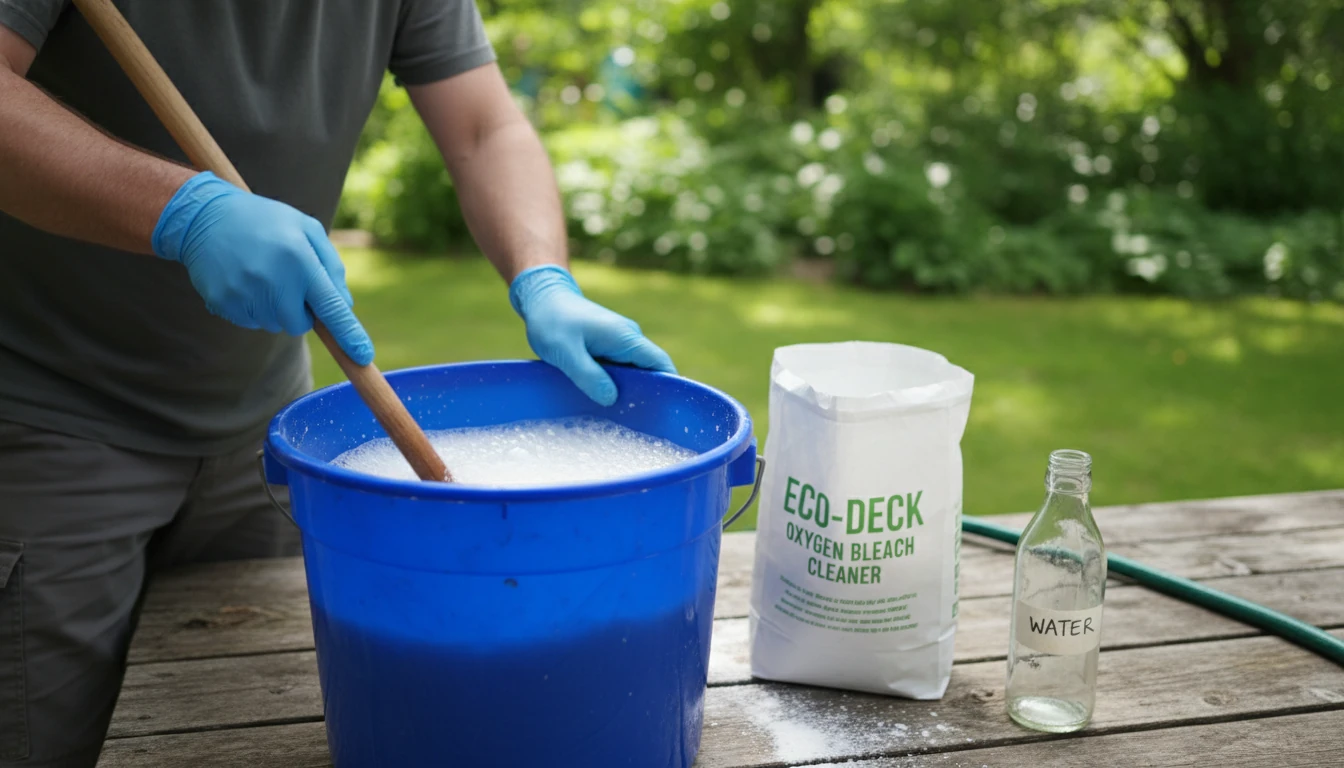
A reliable homemade cleaner uses oxygen bleach (not chlorine bleach). A simple mix is:
- 1 gallon warm water
- 1 cup powdered oxygen bleach (often labeled sodium percarbonate)
- A small squirt ammonia-free dish soap (optional, for extra surfactant)
Oxygen bleach is popular because it lifts grime and breaks down organic growth without the harsh whitening and drying effects common with chlorine-based products. It’s also generally easier on plants—especially when you pre-wet and rinse landscaping.
Store-Bought Cleaners (What to Look For)
For commercial options, look for oxygen-based cleaners or products listing sodium percarbonate. Avoid heavy chlorine bleach formulas unless you’re dealing with severe growth and you’re willing to be extra careful with surrounding plants and wood color.
If you plan to stain or seal afterward, some homeowners use a wood brightener (often oxalic acid-based) after cleaning to help reset wood tone and improve finish absorption. Always follow product directions and spot-test first.
Pre-Cleaning Preparation Steps
Preparation prevents streaks, missed spots, and accidental landscape damage. It also makes the cleaning itself faster.
Remove Furniture, Rugs, and Decor
Clear the deck completely—furniture, grills, planters, and rugs. Rugs and planters trap moisture underneath, which is where algae and mildew tend to thrive. Clearing everything also lets you inspect problem zones (rail bases, corners, and shaded edges).
Protect Nearby Plants and Landscaping
Before applying any cleaner, thoroughly soak nearby plants and soil with plain water. This reduces the chance of leaves absorbing overspray. For sensitive plants, use a light tarp, but remove it promptly after cleaning to prevent heat buildup.
Know Your Deck Material (So You Don’t Damage It)
- Pressure-treated pine: durable, but can fuzz/splinter if scrubbed aggressively or pressure-washed too hard.
- Cedar/redwood: softer woods—clean gently and avoid harsh bleach that can alter color.
- Composite decking: different cleaning needs; follow the manufacturer’s instructions and avoid “wood restorers” not designed for composite.
Step-by-Step Guide to a Spotless Wood Deck
Follow these steps in order for the best results with minimal effort.
1) Sweep and Remove Debris
Dry-sweep thoroughly, focusing on gaps between boards. Trapped debris holds moisture against the wood and can accelerate rot. Use a putty knife or gap tool for stubborn buildup.
2) Pre-Wet the Deck
Lightly wet the deck with your hose. This helps the wood absorb cleaner evenly and reduces streaking.
3) Apply Cleaner and Let It Work (Dwell Time)
Apply your cleaning solution in small sections (about 20–30 sq ft) so it doesn’t dry out. Let it sit for 10–15 minutes. This dwell time is where oxygen bleach does the heavy lifting—breaking down grime and organic growth so you don’t have to scrub like crazy.
4) Scrub Safely (With the Grain)
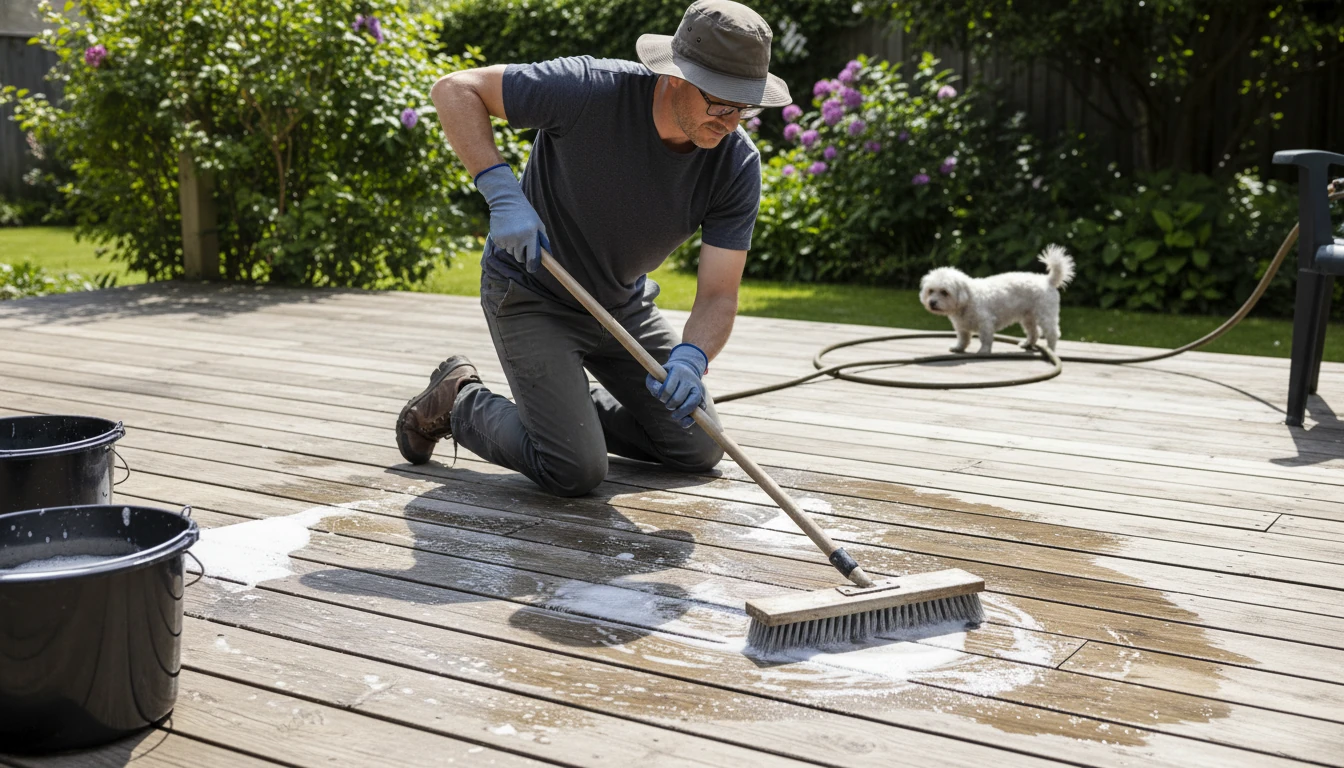
Scrub in the direction of the wood grain using steady, moderate pressure. You’ll often see the solution darken as it lifts dirt. Avoid aggressive cross-grain scrubbing, which can roughen the surface.
5) Rinse Thoroughly
Rinse the cleaned section with a hose until water runs clear and no suds remain. Repeat section by section across the deck.
Removing Tough Stains: Mold, Mildew, and Algae
Shaded decks or damp climates often develop slippery green algae, mildew haze, or darker mold spots. Oxygen bleach is usually the best first-line solution for broad areas.
For small spot treatments, a vinegar-and-water mix can help with algae on limited areas, but it’s not always strong enough for deeper staining. If dark stains persist after a full cleaning, they may be tannin stains (common in certain woods) or deep-rooted growth—at that point, a deck-specific restorer may be needed. Spot-test first and avoid overuse of harsh chemicals.
Post-Cleaning Maintenance Tips
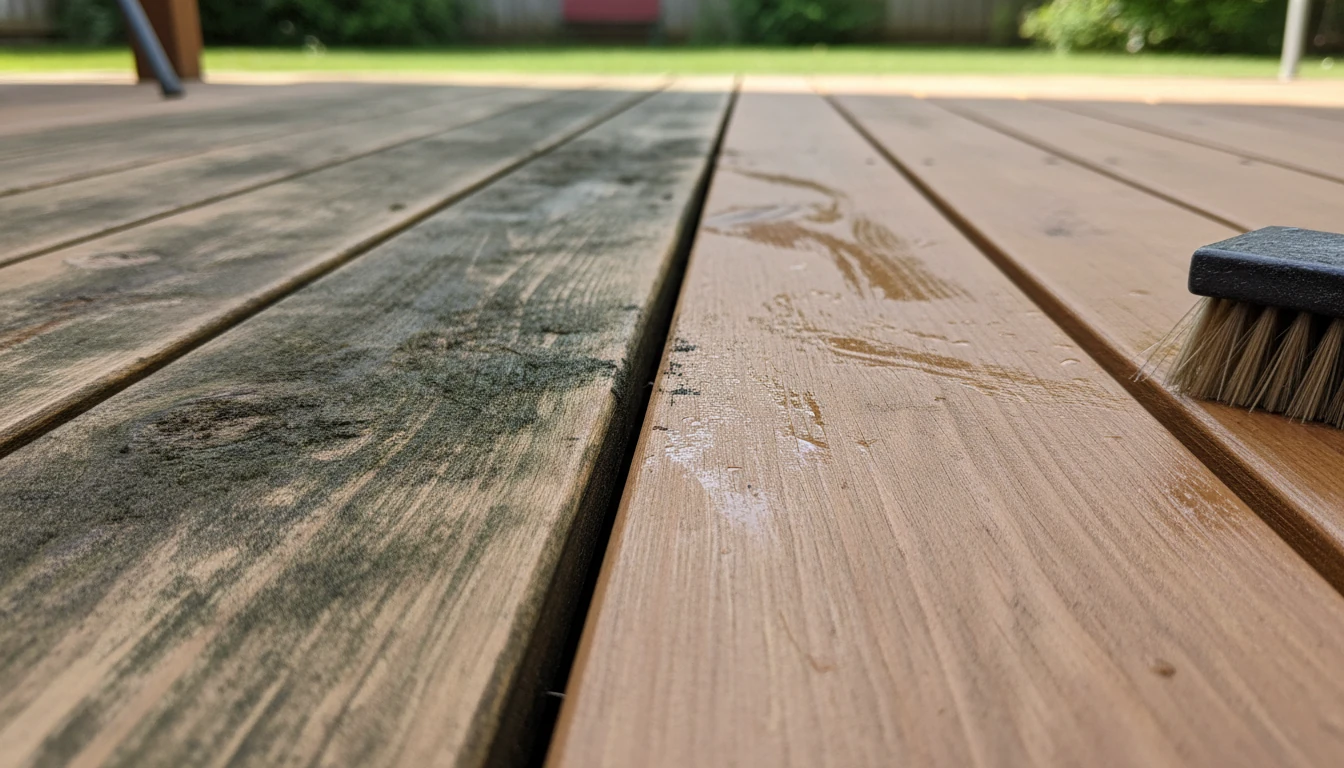
Cleaning is only half the job. After cleaning, wood pores are open and ready to absorb either protective finish or moisture and grime—so timing matters.
When to Seal or Stain (The 48-Hour Rule)
Allow the deck to dry completely for at least 48 hours of clear weather before staining or sealing. Sealing damp wood can trap moisture, leading to peeling and premature failure.
Quick test: sprinkle a few drops of water on the surface. If they soak in quickly, the wood is typically ready. If they bead up, the wood may still be damp or an old finish may still be present.
Regular Cleaning Schedule (What Most Homes Need)
For most homes, a deep clean once per year (often spring) is enough, with quick sweeps and spot rinses throughout the season. Cedar decks often benefit from gentle annual cleaning because the wood is softer and can show weathering sooner than pressure-treated lumber.
Common Deck Cleaning Mistakes to Avoid (2026)
- Using too much pressure: high PSI can gouge boards and raise grain.
- Skipping dwell time: scrubbing too soon makes the job harder and roughs the wood.
- Letting cleaner dry on the deck: can cause uneven results; work in small sections.
- Overusing chlorine bleach: can discolor wood and stress nearby plants.
- Staining/sealing too soon: trapping moisture is a top reason finishes fail early.
- Not rinsing well: leftover residue can interfere with stain adhesion.
Conclusion: Enjoy Your Refreshed Outdoor Space
Easy deck cleaning isn’t about shortcuts—it’s about using the right tools and methods that respect the wood. A simple oxygen-based solution, proper dwell time, gentle scrubbing with the grain, and a thorough rinse will make most decks look dramatically better without risking damage.
Once it’s dry, protect your investment with the right stain or sealer and stick to a simple yearly routine. With consistent care, your deck can stay safer, cleaner, and better-looking throughout 2026 and beyond.
Updated for 2026. Always follow manufacturer instructions for stains, sealers, and specialty cleaners, and test any solution on a small area first.
FAQ: Wood Deck Cleaning
Can I clean a wood deck without a pressure washer?
Yes. A hose with a high-pressure nozzle plus an oxygen-based cleaner and a scrub brush is a safe and effective approach for most decks.
How long should deck cleaner sit before scrubbing?
Typically 10–15 minutes (check your product label). Don’t let the solution dry on the wood—work in small sections.
Is oxygen bleach safer than chlorine bleach for decks?
In many cases, yes. Oxygen bleach is effective on organic growth and tends to be less harsh on wood color and surrounding plants when used correctly.
How soon can I stain or seal after cleaning?
Wait at least 48 hours of clear weather so the wood can dry thoroughly. Staining damp wood can cause peeling and premature failure.
How often should I deep clean my deck?
Most decks do well with an annual deep clean plus regular sweeping. Shaded decks or humid climates may need more frequent spot treatments for algae.
What if black stains remain after cleaning?
They could be tannin stains or deeper growth. Try a second oxygen-bleach application first; if stains persist, consider a deck restorer and spot-test carefully.