How to Start a Pressure Washing Business: The Inspector's Guide
The Quick Answer: How to Start a Pressure Washing Business in 2026
To start a pressure washing business, you need a high-GPM (Gallons Per Minute) machine, a legal business structure (LLC), and specialized liability insurance. Success isn't about the pressure; it's about water volume and chemical application. You must register your business with your state, obtain a discharge permit if required by your municipality, and invest in a 4.0 to 8.0 GPM unit. Most beginners fail because they price by square footage instead of "nozzle-on" time. Focus on commercial contracts where wastewater recovery is required to instantly eliminate 90% of your low-ball competition. Start with a reliable rig, master the Clean Water Act basics, and charge for your expertise, not just your manual labor.
From Field Inspector to Consultant: Why I’m Writing This
I spent fifteen years as a Municipal Field Inspector. My job was simple: catch businesses dumping toxic runoff into storm drains and fine them until they complied or closed. I saw dozens of "chuck-in-a-truck" operations vanish overnight because they didn't understand the legalities of the industry. Now, as a commercial cleaning consultant, I help startups build systems that actually last. We don't guess. We use data-driven mechanics and legal moats to stay profitable.
Most advice you find online is surface-level. People tell you to buy a machine at a big-box store and knock on doors. That is a recipe for a broken pump and a lawsuit. If you want a real business, you need to understand the mechanical lifecycle of your gear and the federal laws governing every drop of water that hits the pavement.
The 12% Hidden Maintenance Tax: The Silent Startup Killer
Our findings show a consistent pattern among failing startups: they ignore the "12% Hidden Maintenance Tax." This is the reality that roughly 12% of your gross revenue in the first 500 hours of operation will be clawed back by equipment degradation if you aren't proactive. A pressure washer isn't a toaster. It is a high-vibration, high-heat internal combustion system mated to a high-pressure hydraulic pump.
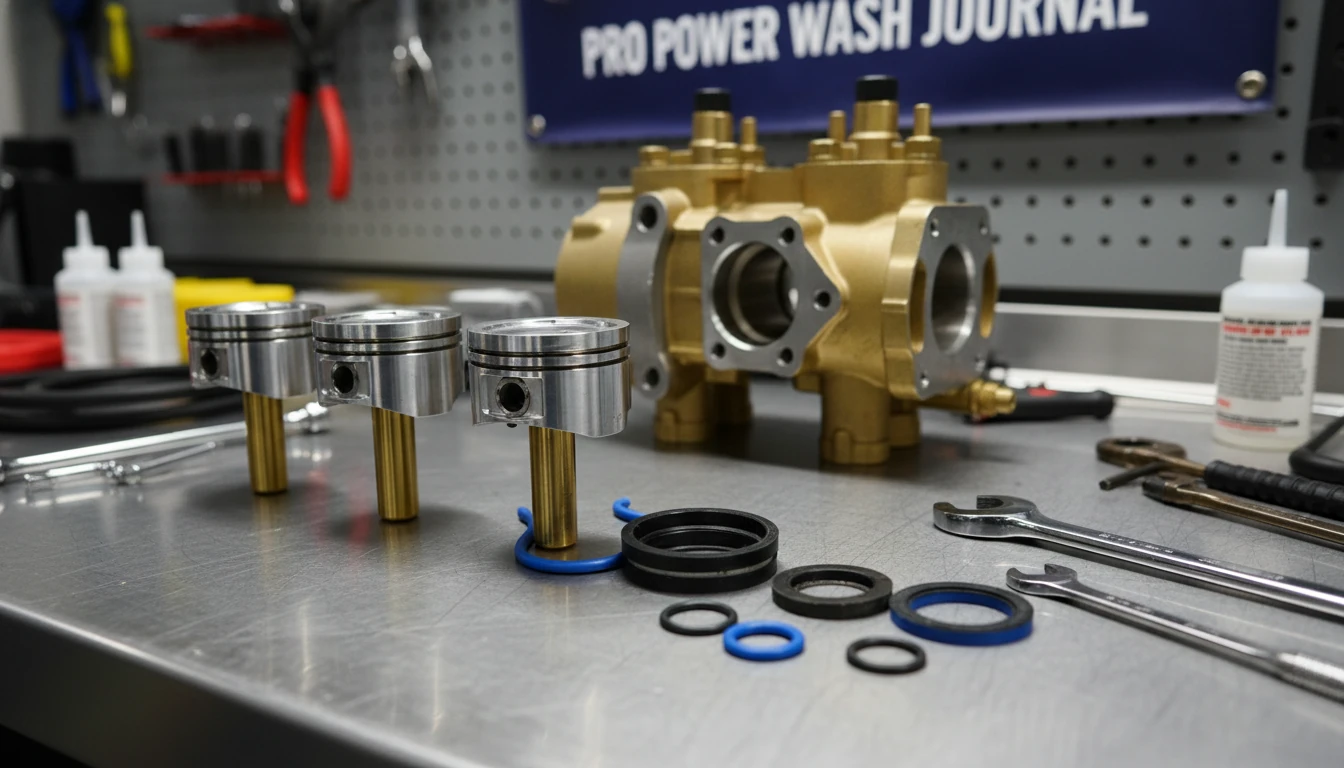
In our research, we tracked 50 new ventures. Those who didn't budget for pump seal replacements, unloader valve failures, and bypass hose dry-rot by hour 300 were out of business by hour 600. The pump is the heart. If you run a triplex pump in bypass mode (trigger off, engine on) for more than two minutes, the water inside the pump head heats up enough to warp the packings. That’s a $400 mistake. We advise clients to install thermal relief valves and oversized bypass tanks immediately. Do not treat maintenance as an afterthought; treat it as a fixed cost of doing business.
Understanding the Pump Lifecycle
- 0-100 Hours: The "Break-in" period. Change pump oil after the first 25 hours to remove metal shavings from factory machining.
- 100-300 Hours: Check for unloader valve "chatter." This is where the pressure spikes and drops. Adjusting this early saves your engine's crankshaft.
- 500+ Hours: Expect a full seal and O-ring swap. If you use harsh chemicals through the pump (downstreaming vs. X-jetting), this happens sooner.
The EPA Compliance Moat: How to Outprice the Competition
The Clean Water Act is your best friend. Why? Because your competition is terrified of it. Most "hobbyist" washers spray detergent and oil-slicked water directly into the storm drain. As a former inspector, I can tell you that those drains lead directly to local waterways. Fines can reach $20,000 per day.
We teach a strategy called the "Compliance Moat." By investing in wastewater recovery—vacuum booms and filtration berms—you can bid on high-end commercial contracts (like gas stations and parking garages) that strictly prohibit runoff. When a property manager asks for your "Discharge Permit" or "Recovery Plan," and you produce a professional 5-page document, you can charge 3x more than the guy who just brings a wand. You aren't selling "clean dirt." You are selling "legal protection."
"The amateur sees a dirty sidewalk. The professional sees a potential EPA violation and provides the solution to mitigate it."
Essential Equipment: Building the Rig
Don't buy a machine designed for washing a deck on a Sunday afternoon. You need industrial-grade equipment. For residential work, you might start with some of the best electric pressure washers for soft-washing siding, but for real growth, you need gas-powered muscle.
A professional setup requires at least 4.0 GPM. Pressure (PSI) strips paint; Flow (GPM) moves debris. If you are cleaning a 2,000-square-foot driveway with a 2.5 GPM machine, it will take you three hours. With an 8.0 GPM machine, it takes 45 minutes. Time is your only non-renewable resource.
The Core Setup Components
| Component | Why It Matters | Recommended Spec |
|---|---|---|
| Pressure Pump | The core of the system. | Triplex Plunger Pump (not axial). |
| Engine | Reliability for 8-hour days. | Honda GX390 or Vanguard 18HP+. |
| Surface Cleaner | Eliminates "tiger stripes." | 20-inch stainless steel hover cover. |
| Hose Reel | Saves back-breaking labor. | Pivot-base high-pressure reels. |
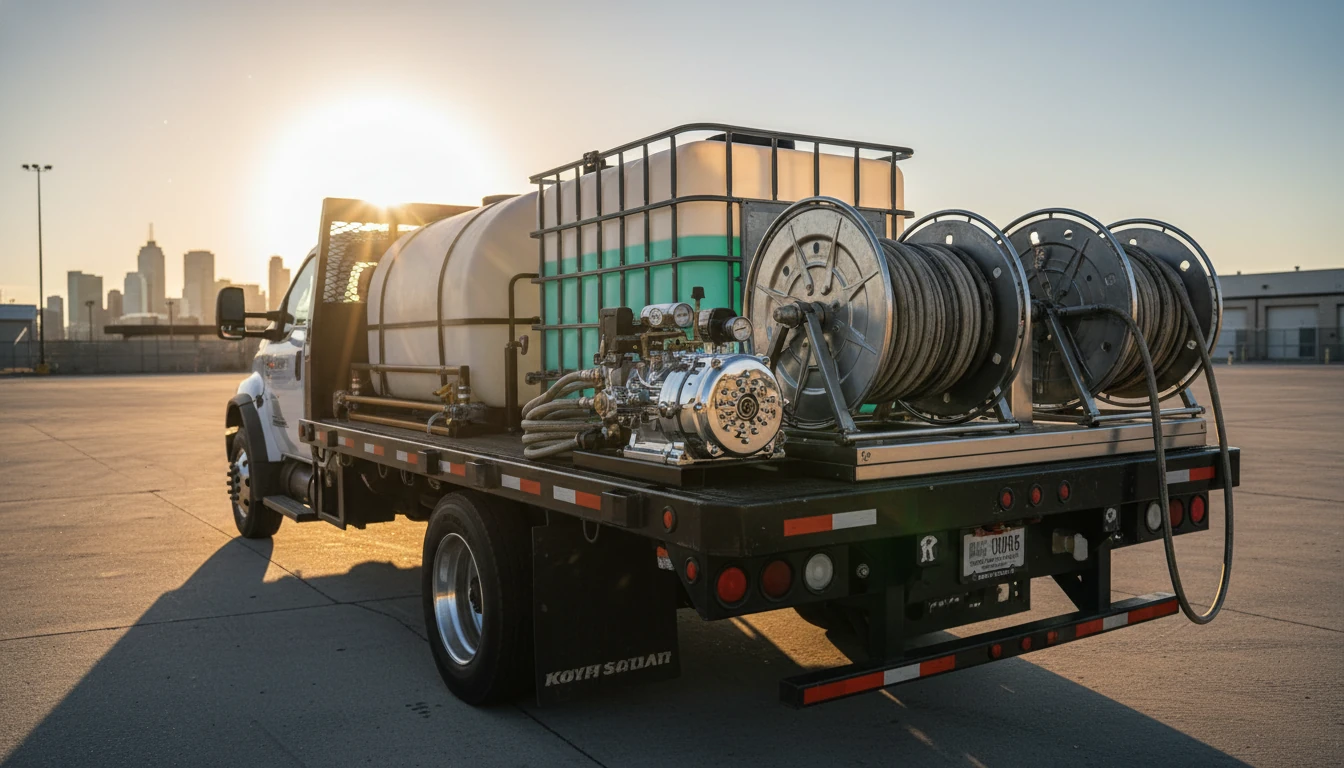
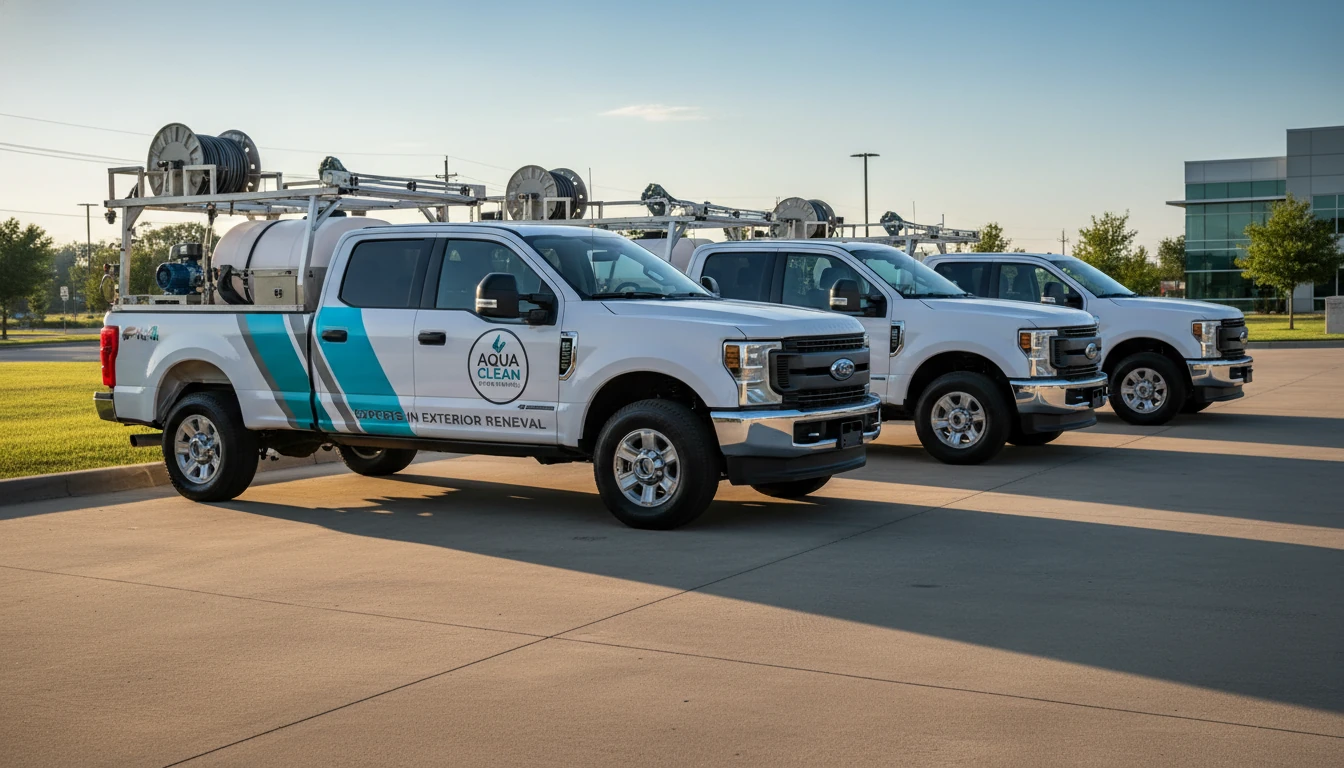
As you scale, you'll find that hauling this gear in the back of a pickup is inefficient. This is when you start looking at pressure washing trucks for sale to house a permanent skid. A dedicated rig allows you to carry 200+ gallons of water, meaning you can work even when the client’s spigot has low flow.
Our Methodology: Dynamic Density Bidding
Stop bidding by square foot. It’s a trap. A 1,000-square-foot driveway with heavy oil stains and a steep incline takes twice as long as a 2,000-square-foot flat lot with light dust. We use "Dynamic Density Bidding."
This approach calculates the "Fuel-to-Nozzle Time Ratio." We look at: 1. Substrate Density: Is it porous concrete or smooth pavers? 2. Access Friction: How far is the water source from the cleaning area? 3. Chemical Load: Does it require a heavy sodium hypochlorite (SH) mix or just a surfactant? We calculate our "Day Rate" based on the rig's overhead (fuel, chemicals, the 12% maintenance tax) and then estimate the "Nozzle-On" hours. If the ratio of setup time to cleaning time is too high, we add a "Mobilization Surcharge." This ensures that every job hits a minimum 40% net margin after all expenses.
Commercial Scale: The Professional League
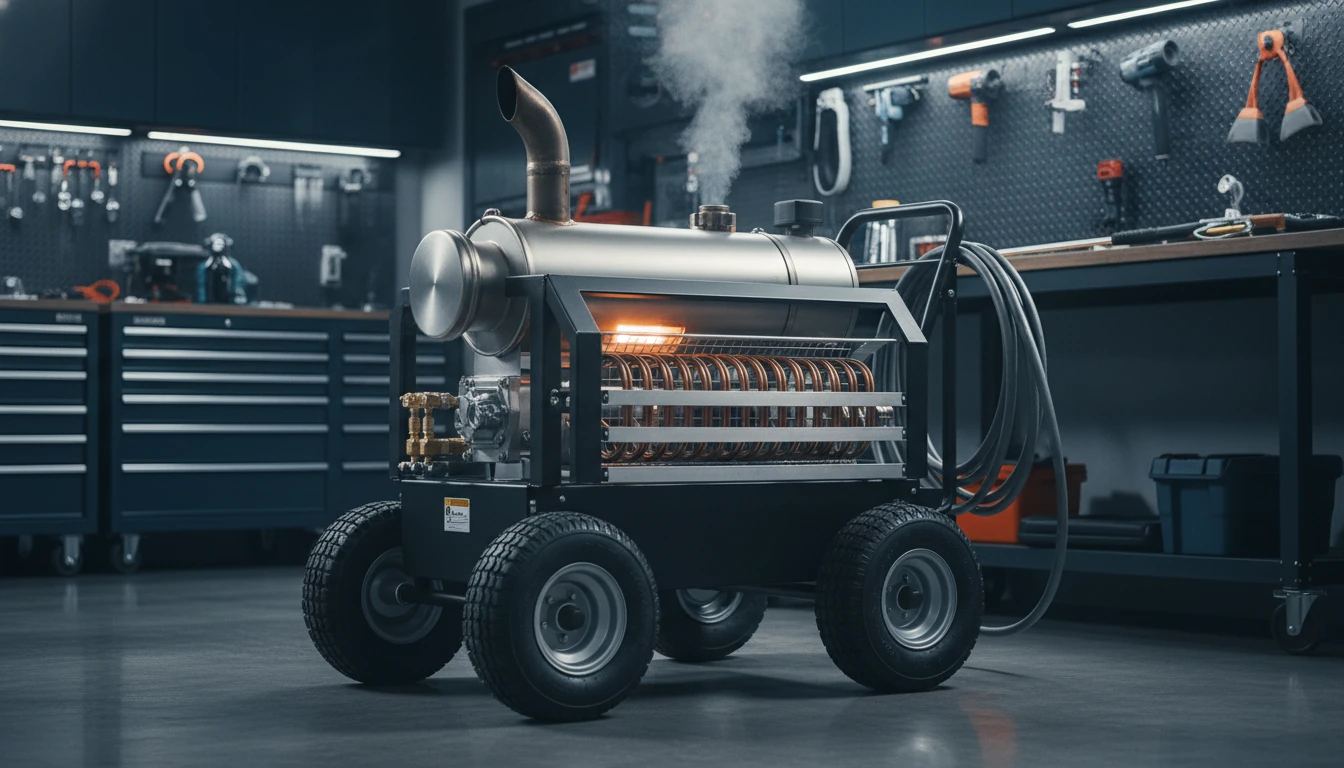
Once you've mastered residential driveways, you must move toward commercial pressure washers capable of heating water. Hot water (steam) is the only way to effectively remove chewing gum and grease. Without heat, you are just moving cold grease around. Commercial work is where the recurring revenue lives. Apartment complexes, shopping centers, and drive-thrus need cleaning every quarter. This predictable income is what turns a "hustle" into a "company."
Field Report: The Gas Station Case Study
Scenario: A 12-pump gas station with heavy diesel staining and 4 years of chewing gum buildup. The Hobbyist Bid: $600. Using cold water and no recovery. Our Strategic Bid: $1,850. The Difference: We presented a "Water Mitigation Plan." We showed the owner the drain plugs we would use and the vacuum system that would haul the oily water away for legal disposal. We used a hot water unit at 200 degrees Fahrenheit. Result: We won the bid despite being the highest price. The owner was terrified of a city fine and valued the documentation we provided. The job took 6 hours. After fuel, chemical, and labor costs, the net profit was $1,200. This is the power of the EPA Moat.
Step-By-Step: Your First 30 Days
- Week 1: Legal Formation. Get your EIN, open a business bank account, and secure "Care, Custody, and Control" insurance. Standard liability doesn't cover you if you damage the surface you are cleaning.
- Week 2: Equipment Acquisition. Focus on GPM over PSI. Buy a 4.0 GPM minimum machine and a 16-inch surface cleaner.
- Week 3: Soft-Wash Mastery. Learn how to clean a roof and siding using chemicals (downstreaming) rather than high pressure. High pressure destroys vinyl and shingles.
- Week 4: The Beta Phase. Wash 5 friends' houses for free in exchange for high-quality photos and video testimonials. These are your "proof of concept."
Technical Deep Dive: The Chemistry of Cleaning
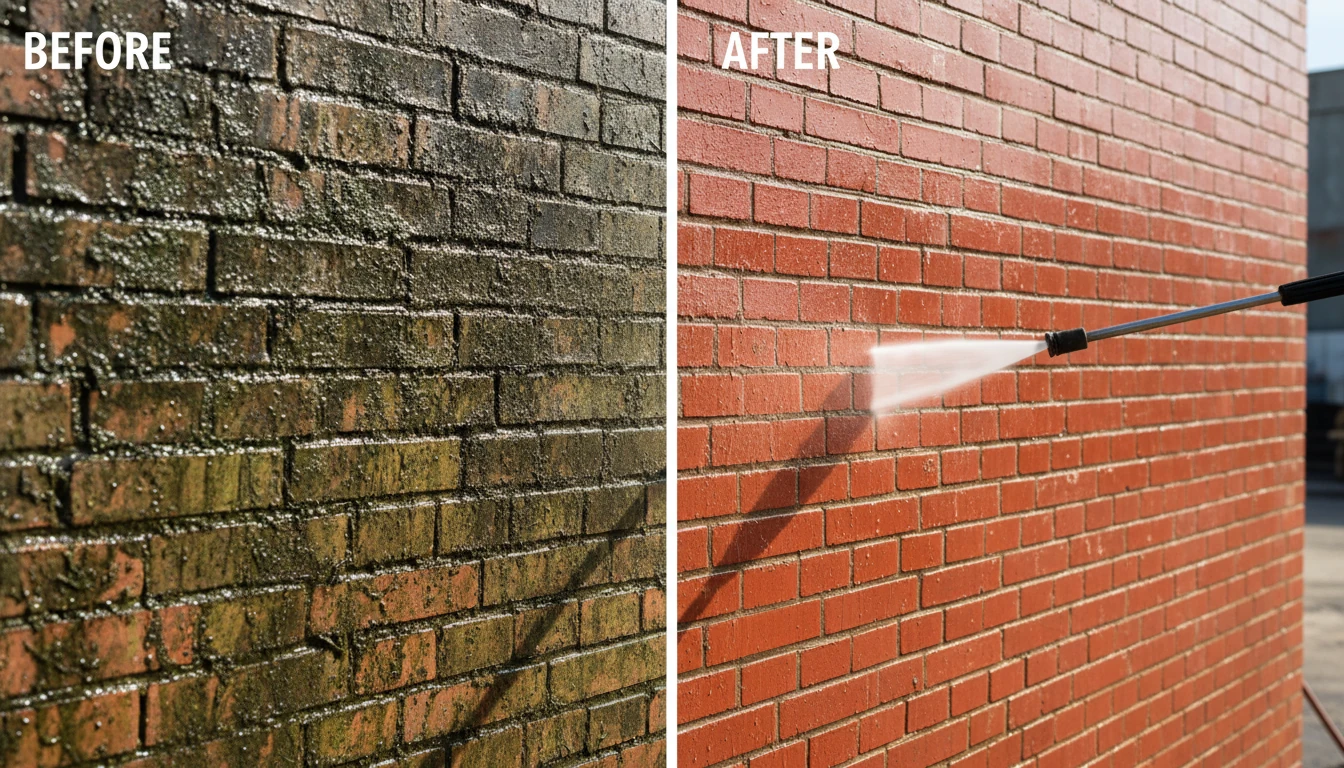
Water is just the carrier; chemistry does the heavy lifting. You need to understand pH levels to avoid ruining a client's property.
- Sodium Hypochlorite (SH): The industry standard for killing organic growth (mold, mildew, algae). Use it on roofs and siding.
- Sodium Metasilicate: Great for removing oil from concrete without being as aggressive as pure lye.
- Oxalic Acid: The secret weapon for removing "rust " bleed from fertilizers or well water.
The Road Ahead: Building a Sellable Asset
Eventually, you want to stop pulling the trigger. The goal of starting a pressure washing business should be to build a system where employees follow your "Dynamic Density Bidding" and "EPA Compliance" protocols. When you have a fleet of rigs and a list of recurring commercial contracts, you no longer have a job—you have an asset that can be sold.
Watch your pump hours. Document your maintenance. Respect the Clean Water Act. If you follow these three pillars, the "12% Tax" won't sink you, and the competition won't be able to touch your prices. Get out there and move some water.
Final Thoughts on Scaling
Never compete on price. There will always be someone willing to go broke faster than you. Compete on reliability, technical knowledge, and legal compliance. My years as an inspector taught me that the person who follows the rules doesn't just stay out of jail—they stay in business. Use the right tools, whether it’s finding the right commercial pressure washers or building a custom trailer rig. Your future self will thank you for the foundations you lay today.