Pressure Washer Maintenance Checklist (2026): Step-by-Step Care for Pump + Engine
Owning a pressure washer is a lot like owning any power tool with moving parts: it performs best when you follow a consistent maintenance routine. In the U.S., pressure washers are a real investment—often anywhere from a few hundred dollars to well over $1,500 for heavy-duty units. Most failures that frustrate owners (hard starts, surging, low pressure, leaking pumps, cracked manifolds after winter) are usually preventable with basic care.
This guide gives you a practical, step-by-step maintenance checklist for 2026—organized by pre-use, monthly, seasonal, and storage/winterizing. Use it as a reference you can actually follow, whether you’re a homeowner cleaning patios on weekends or running equipment weekly for jobs.
Quick checklist: Check oil (gas), confirm fresh fuel, inspect hose/O-rings, clean inlet screen, verify water supply, test spray tips, and never run the pump more than 2–3 minutes with the trigger closed.
In this guide:
Safety note: High-pressure water can cause serious injury. Wear eye protection and closed-toe shoes, keep hands away from spray, and never point the gun at people or pets. Relieve pressure before disconnecting hoses.
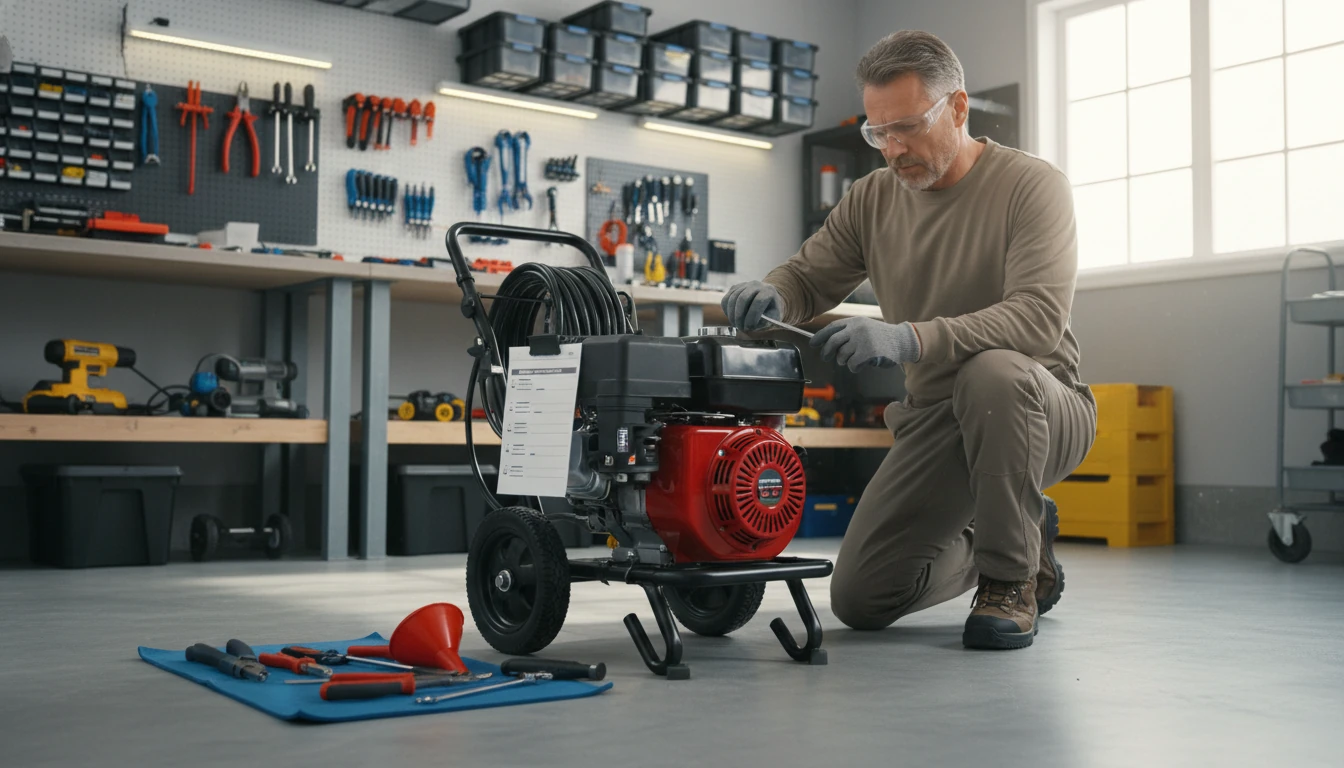
Pre-Operation Maintenance: The 5-Minute Safety Check
Before you pull the cord or press the power button, do a quick inspection. This small habit prevents the most expensive mistakes: running the pump dry, operating with a damaged hose, or pushing a failing connection until it bursts.
1) Oil + Fuel Check (Gas Models)
Engine oil: Check oil with the machine on level ground. Pull the dipstick, wipe it, reinsert, then verify the level. Use the oil grade recommended by your engine manual. Many small engines commonly use SAE 10W-30, but always verify the exact spec and capacity for your model.
Fuel: Use fresh gas. If fuel has been sitting for 30+ days without stabilizer, it may start to degrade and cause hard starts or carb issues. When possible, use fuel with low ethanol content (ethanol attracts moisture over time).
2) Water Supply Check (All Models)
Turn on the garden hose first. Confirm steady flow before starting the washer. Pumps are designed to move water—not air. Running dry or with weak flow can cause cavitation and seal damage.
3) Inspect High-Pressure Hose + O-Rings
Wear gloves and inspect the hose for kinks, abrasions, bubbles, or exposed wire braiding. Replace a compromised hose immediately—burst hoses under pressure are a major hazard.
Check O-rings at each connection (pump outlet, gun inlet, quick-connects, wand). A flattened or cracked O-ring causes leaks and pressure drops. Keep spare O-rings on hand and apply a tiny amount of silicone grease to help them seat properly (don’t overdo it).
4) Trigger + Gun Test
Confirm the trigger moves smoothly and returns fully. A sticky trigger can cause unsafe operation and contributes to overheating if you’re not actively spraying.
Monthly Maintenance Tasks to Prevent Power Loss
These tasks protect flow and spray pattern—two things that directly affect cleaning performance. If your washer feels “weaker than it used to,” start here.
Clean the Water Inlet Screen (Prevent Cavitation)
The inlet screen blocks sand, grit, and mineral flakes from entering the pump. A clogged screen restricts water flow and can trigger cavitation (tiny bubbles collapsing inside the pump), which accelerates internal wear.
- Disconnect the garden hose from the pump inlet.
- Use needle-nose pliers to gently remove the inlet screen (if removable on your model).
- Rinse under clean water.
- If mineral scale is present, soak in white vinegar for ~10 minutes, then rinse.
- Reinstall the screen and reconnect the hose.
Inspect + Clean Spray Tips (Nozzle Maintenance)
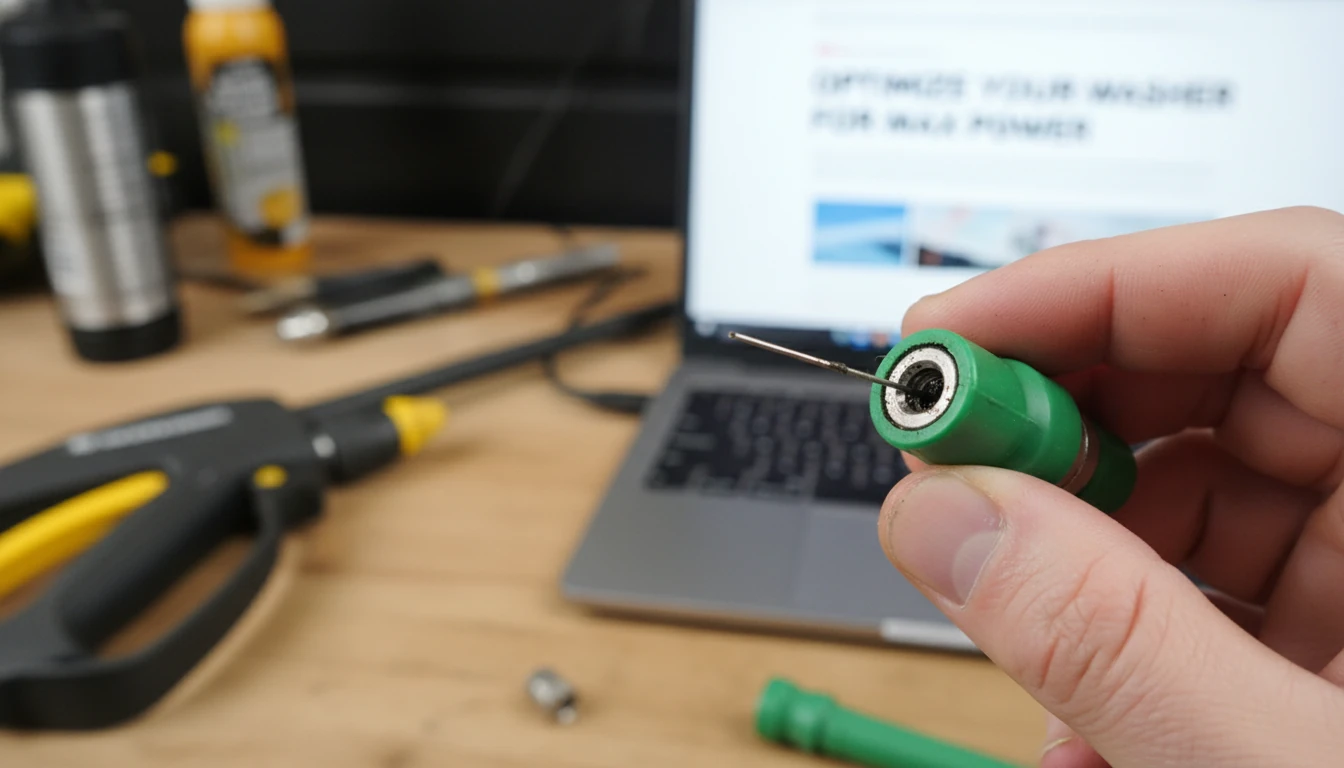
A distorted spray pattern usually means a partially blocked tip. Even a grain of sand can cause poor performance. If you don’t have the factory cleaning tool, a straightened paperclip or thin wire can work—just be gentle to avoid enlarging the orifice.
- Remove the spray tip.
- Insert thin wire into the opening to loosen debris.
- Flush the tip from the reverse side (back-flush) to push debris out.
- Re-test the spray pattern.
Quick-Connects + Leaks Check
Look for drips at quick-connect fittings, the gun, and pump outlet. A small leak often means a worn O-ring—not a major pump failure. Fixing leaks early improves pressure and reduces wear.
Engine and Pump Care: Deep Dive (What Actually Keeps It Alive)
The engine provides power, but the pump does the most demanding work. Proper lubrication and airflow are the difference between “starts first pull” and “why is it surging again?”
Pump Oil: When and How to Change It (If Your Pump Is Serviceable)
Not all pumps are serviceable. Many entry-level electric units and some residential pumps are sealed and do not support oil changes. If your pump has an oil fill and drain, follow your manual. A common guideline is:
- First change: after the initial break-in period (often around 50 hours, but follow your manual).
- After that: every 100–200 hours or once per season.
Use the pump oil type specified by your pump manufacturer (many specify non-detergent pump oil). Automotive oil may foam in some pump designs and can shorten seal life if the manual warns against it.
Engine Air Filter + Spark Plug (Gas Models)
Air filter: Check monthly during heavy use. Foam filters can often be washed, dried, and lightly oiled (if your manual recommends it). Paper filters should be replaced when dirty—tapping them out only helps a little.
Spark plug: Inspect at least once per year (or per season for frequent use). Replace if you see heavy carbon, a worn electrode, or damaged insulator. A clean plug improves starting and reduces misfires.
Thermal Protection: Don’t “Idle” the Pump
Never leave the machine running with the trigger closed for more than about 2–3 minutes. The pump recirculates water internally, it heats quickly, and hot water destroys seals. If you need a break: shut the unit off.
Seasonal Storage: How to Winterize Your Pressure Washer
In many U.S. climates, more pumps are ruined by freezing than by daily use. Water expands when it freezes. If water remains inside the pump manifold or hoses, it can crack components. Winterizing is non-negotiable when temperatures drop below 32°F.
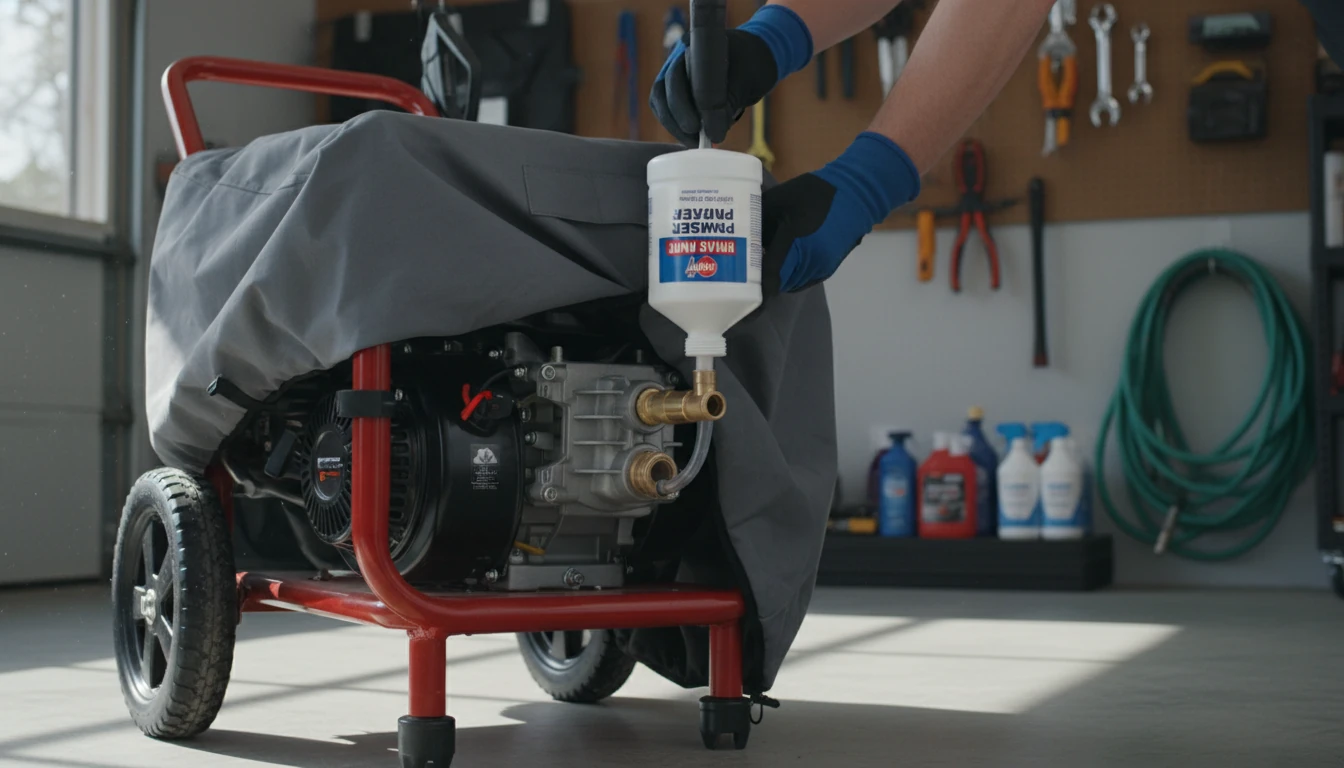
Step-by-Step: Winterize With Pump Saver
- Turn the unit off and disconnect the spark plug wire (gas models) for safety.
- Disconnect the garden hose and high-pressure hose.
- Connect pump saver to the water inlet per the product instructions.
- Spray until product exits the pump outlet (or as directed), coating seals and displacing water.
- Store the unit in a dry area.
Fuel System Storage (Gas Models)
For storage longer than a month, protect the fuel system to avoid carburetor varnish:
- Option A (common): Add fuel stabilizer to fresh fuel and run the engine for a few minutes to circulate treated fuel into the carb.
- Option B (often best for long storage): Drain the tank and run the engine until it stalls (carb bowl empties). Follow your manual and local safety rules.
Storage Environment
Store indoors if possible—dry, ventilated, away from open flames or ignition sources. Keep hoses loosely coiled (no sharp bends), and don’t stack heavy items on top of them.
Gas vs. Electric Pressure Washer Maintenance Differences
Electric units are generally lower maintenance (no engine oil, no spark plug, no air filter), but they’re sensitive to running dry and can be vulnerable to cord/GFCI damage. Inspect cords and plugs regularly.
Gas units require more routine care (oil, fuel system, air filter), but many parts are serviceable and replaceable. With consistent maintenance, they often remain usable for many years.
Troubleshooting: Low Pressure, Surging, and Common Failures
Even with good habits, performance issues can pop up. Start with the simplest checks before assuming the pump is “bad.”
Low Pressure Under Load (Surging)
- Water supply: Make sure the hose isn’t kinked and provides strong flow. A 5/8" hose is commonly recommended for adequate flow.
- Inlet screen: Clean it (restricted inlet = cavitation and weak pressure).
- Nozzle: Try a different tip and clean the one you’re using.
- Air in the line: With water on, squeeze the trigger until flow is steady before starting the engine.
- Unloader valve: If water supply and nozzle are good, the unloader may need cleaning/adjustment (refer to manual).
Water Dripping From a Small Valve (Thermal Relief)
If the washer was running with the trigger closed, hot water may have activated the thermal relief valve. Occasional discharge can be normal. Constant dripping may indicate the valve is failing or the unit is overheating regularly. Replacement is often straightforward on many models, but confirm the correct part for your pump.
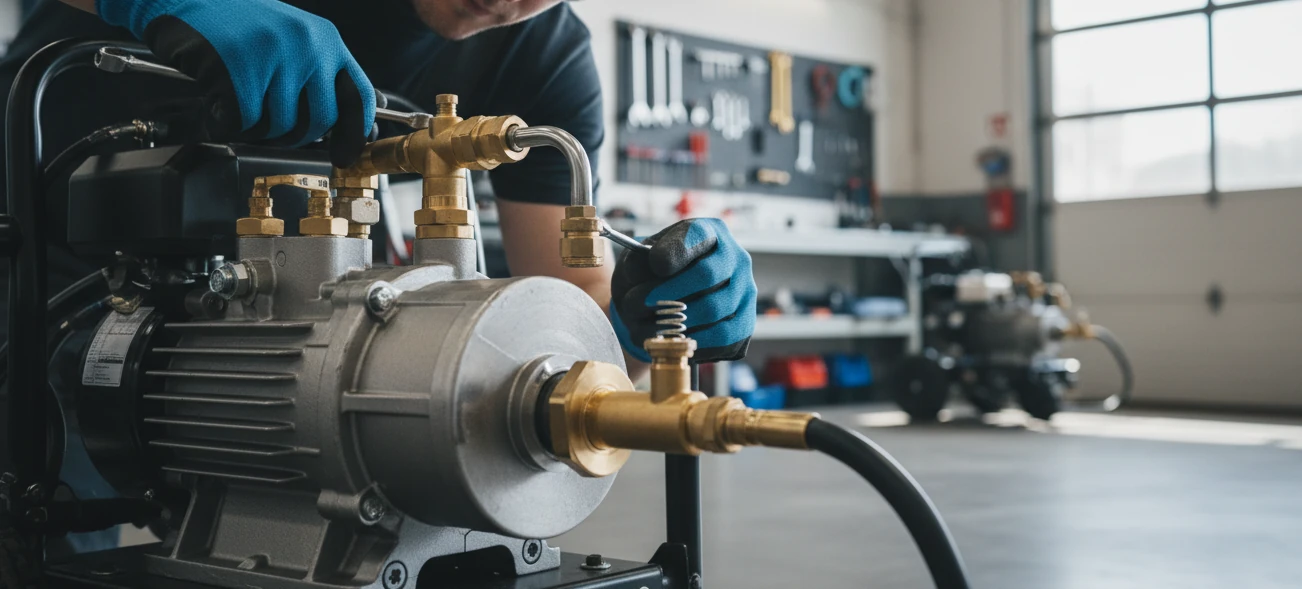
Simple Maintenance Log Template (Copy/Paste)
Documentation helps you stay consistent and is useful for warranty support or resale. Use a note app or spreadsheet with fields like:
- Date:
- Hours used (if available):
- Engine oil checked/changed:
- Pump oil checked/changed (if serviceable):
- Inlet screen cleaned:
- Nozzles cleaned/replaced:
- O-rings replaced / leaks fixed:
- Winterized (pump saver + fuel plan):
Conclusion: The Real Benefit of a Consistent Checklist
The difference between a washer that feels “worn out” after a couple seasons and one that remains reliable year after year is usually routine care. Five minutes before use, a few quick monthly checks, and proper storage can prevent the most common causes of pump and engine failure.
Use this 2026 checklist as your baseline, and always confirm exact oil types, service intervals, and winterizing steps in your specific owner’s manual—especially for pump designs and engine specs that vary by brand and model.
FAQ: Pressure Washer Maintenance
How often should I change engine oil on a gas pressure washer?
Many owners change it at least once per season (or per the manual’s hours-based schedule). Heavy use may require more frequent changes.
Do all pressure washer pumps need oil changes?
No. Many entry-level pumps are sealed. If your pump has fill/drain ports, follow your manual for oil type and intervals.
What’s the #1 cause of pressure washer pump damage?
Running with poor water supply (running dry/cavitation) and freezing damage during storage are two of the most common.
How do I prevent surging and pressure loss?
Ensure strong water flow, clean the inlet screen, keep nozzles clear, purge air before starting, and inspect O-rings for leaks.